| Type | Attack Aircraft |
| First Flight | October 31st 1974 |
| Price | NA |
| Variants | Ij-22, INJ-22 NJ-22, J-22 Orao 2 |
| Costumers and Operators | Bosnia, Serbia, |
| Manufacture | SOKO |
| Powerplant | 2x Orao,/Turbomacenia Rolls-Royce Viper Turbojet |
| Maximum Speed | 586kt (1,086km/h) |
| Combat Radius | 248 nm (460km) |
| Thrust to Weight Ratio | NA |
| G Limit | NA |
| Service Ceiling | 49,210 ft (15,000m ) |
| Aspect Ratio | NA |
| Maximum Take of Weight | 24,427 lb (11,080 kg ) |
| Length | 43 ft 5in (13.2m ) |
| Height | 14ft 11in (4.5m ) |
| Wing Span | 32ft 8in (10.0m ) |
| Payload | 3,307lb (1,500kg ) |
| Hardpoints | 5 |
| Armerment | 2x 23mm GSH-23L cannons, AGM-65 Mavrick, Kh-23, BL-755, Matra Durandal |
| Avionics | None |
Description
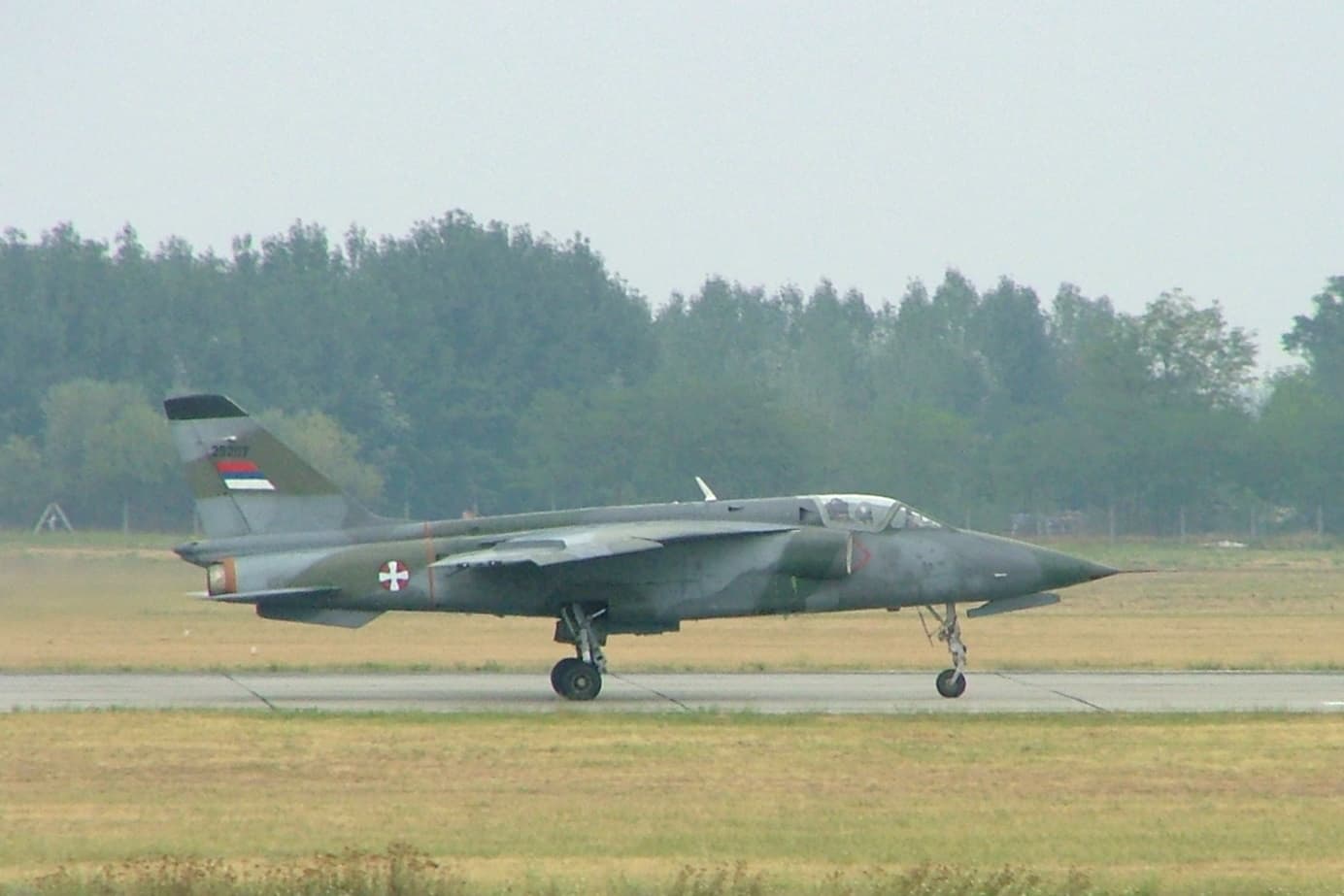
The Soko J-22 was designed for the Yugoslavian Air Force and built in conjunction with the Romanian IAR-93 Vulture. The aircraft functions primarily as a light attack aircraft and is capable of deploying a wide array of air to ground weapons. The J-22 serves in both Bosnia and Serbia’s Air Forces.
Capabilities
Air to Air
The GSH-23 can used against helicopters and slow flying aircraft.
Air to Ground
The J-22 has a robust air to ground capability being able to deploy unguided bombs and guided air to ground missiles. The GSH-23L can also be used to strafe ground targets.